


The word sustainability has lost its meaning. It used to be a rallying cry for conscious consumption and ethical business. Then profit and politics drowned it out.
If you're building climate tech, you've felt it. The deck that worked in 2021 now gets polite nods and no second meeting. The buyer who championed your pilot has stopped saying "net zero" out loud.
The end of a word is not the end of the work. Companies are still decarbonizing, and capital is still flowing to climate tech. What changed is the language buyers will respond to, and who those buyers are.
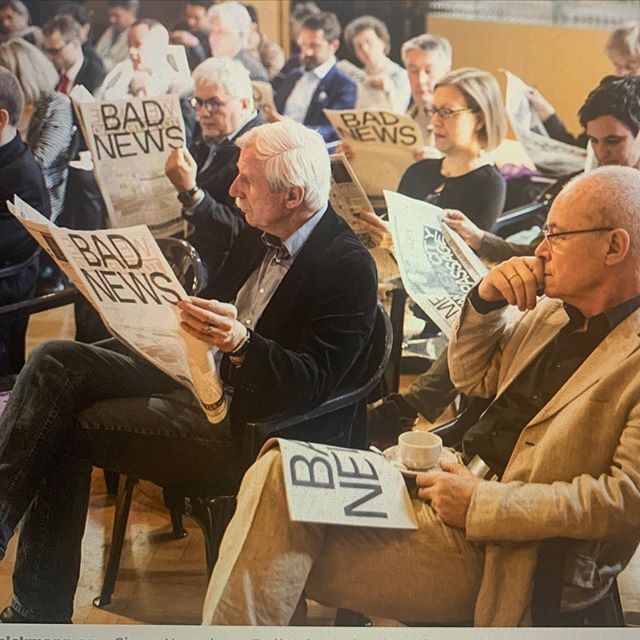
Greenhushing: the work went quiet, not away
Corporate sustainability language has collapsed under political pressure. ESG, net zero and carbon neutral have been stretched until they mean whatever the listener fears they mean. In the U.S. especially, saying them out loud now invites a fight.
So companies moved from greenwashing (claiming to be greener than they are) to greenhushing (doing the work and not talking about it). Some have started swapping in safer words like resilience, efficiency and energy security (IHRB).
The quiet hides how much is still happening. Supply chain leaders describe it as stealth sustainability: less promotion, same commitments. A 2025 UN Global Compact and Accenture study found 99% of CEOs surveyed were staying the course (ISM, March 2026).
For a founder, that is the whole problem in one sentence. Your buyers still need what you make. They just won't buy it for the reason you're selling it.
Why the pushback is so strong
To sell into this market, you have to understand the people pushing back. Mocking them won't help.
Start with the fossil fuel industry. It is one of the most profitable industries in history, and regulation threatens the model it was built on. Its resistance follows its economics. It funds doubt about the science, fights the rules and backs candidates who will slow the transition. That isn't a mystery to solve. It's an incentive to plan around.
Then there is the pushback climate advocates created themselves. For years, much of the movement relied on alarm, shame and moral superiority. Those tactics backfired. They turned environmental care into an identity marker and gave opponents an easy enemy.
Consideration cannot be forced. It can only be incentivized, especially when behavior has gone unchecked for generations.
To the person on the receiving end, moralizing feels like an invasion. They tune out the message, however valid it is. Many of your buyers are those people. That includes the plant manager, the utility engineer and the CFO who has sat through ten years of ESG decks.
The phrase "go woke, go broke" grew out of this resentment, from shareholders who saw social and environmental programs as costs with no return. You don't have to agree with them to see what it means for your pitch: if your value only makes sense to people who already share your values, your market is very small.
Climate tech got practical
The headlines say the climate moment is over. The money says otherwise. Venture investment in climate tech reached about $26 billion in the first half of 2026, up 55% on a year earlier. That was its strongest first half since 2022, according to Currence (ImpactAlpha).
Where that money went is the real story.
- AI needs power. Clean-powered data center developers took 34% of all climate tech funding, up from 3% a year earlier. Firm power is in demand: geothermal, nuclear and storage.
- Fewer, bigger bets. Deal count fell 25% to a five-year low. Investors wrote larger checks to fewer companies with proof they can execute.
- Soft promises lost ground. Equity investment in carbon credit companies dropped 61%.
- The buyer changed. Climate tech is increasingly bought by CFOs and operations teams, not sustainability teams. Buyers want savings or revenue that shows up in their P&Ls. Being green is no longer the pitch (Breega, Jan 2026).
The green premium is gone. What's left is a market that pays for lower costs, reliable power, less risk and resilience, and doesn't care whether you call it climate.
Climate tech messaging that wins buyers: from virtue to value
This is where most climate tech founders get stuck. You believe in the mission, and you should. But your buyer's job is to protect a budget, keep a plant running or deliver a return. Your story has to start there.
| The pitch no longer working | The pitch that wins now |
|---|---|
| "We help you hit net zero by 2040" | "We cut your energy bill 18% in year one" (use your real number) |
| "Sustainable materials for a greener future" | "Lower lifetime cost, and it passes the spec your engineers already use" |
| "Join the climate movement" | "Lock in power you can count on when the grid can't keep up" |
| Impact first, economics on slide 12 | Economics first, impact as the bonus |
| One story for everyone | One story per room: investor, operator, end user |
A few principles behind the right-hand column:
- Lead with the problem they already have. Cost, reliability, risk, compliance, capacity. Emissions cuts come along with it.
- Make the technology understandable without dumbing it down. Technical buyers spot vague claims instantly. Investors back science they can understand.
- Show proof, not promise. Pilots, field data, named customers and performance guarantees. Buyers want results they can audit.
- Don't hide what you are. Greenhushing is a corporate defense, not a startup strategy. Mission still attracts talent, aligned capital and the buyers who share it. Just don't make it the price of admission.
- Speak to people where they are. A rancher in Texas and a fund in Copenhagen want the same grid. They will never describe it in the same words.
That last one is the real skill. It isn't spin. It's translation.

From Sustainability to Regeneration
Spiral Dynamics offers a useful lens on this moment. The model describes how people, organizations and societies move through stages of values.
- Stage Orange is where most of the developed world operates: individual achievement, profit and self-interest. It built the modern economy, including the industries now resisting change.
- Stage Green rises in response to Orange's emptiness. It sees the damage done by systems that sort people into winners and losers. It wants care, fairness and harmony. But it often lacks the practical wisdom to get there, and it judges those who don't share its values.
Orange does not give way easily. Mix green and orange and you get brown: muddy, unstable and messy. That's where we are, and probably will be for another 10 to 15 years.
The stage after Green is the one that interests me: Stage Yellow. Yellow sees the limits of profit-driven Orange and of judgmental Green. It looks for integration, not conflict. Regeneration is how it shows up in culture and business.
Sustainability is defensive. It asks how to avoid losing more. Regeneration asks how to create the conditions for life to thrive again, for people, ecosystems and cultures.
For climate tech founders, Yellow is a practical place to stand. It lets you speak Orange's language (cost, return, reliability) without giving up Green's purpose. You don't have to choose between the CFO and the mission. You have to show the CFO the mission pays.

Making space for what comes next
Language evolves. When terms become politicized, new ones rise to replace them.
The climate tech companies that win this decade won't be the loudest about saving the planet. They'll be the clearest about what they do, who it's for and why it's worth paying for. The planet benefits either way.
A shared future requires global collaboration — bridges across cultures, countries, and continents. It requires listening to voices different from our own.
Let’s embrace complexity, draw from what has come before, and shape frameworks that meet people where they are.
✸

Building climate tech that's harder to explain than it should be? Jegayo helps engineering, deep tech and climate tech founders turn complex technology into positioning buyers and investors understand. Book a call and let's find where your company is being underestimated.
Thanks to everyone in my life whose conversations spark these articles.
Sources
- AI power demand revives climate tech funding, ImpactAlpha, reporting Currence's H1 2026 data
- Where Is European ClimateTech Infrastructure Investment Heading in 2026?, Breega, January 2026
- Stealth Sustainability, Inside Supply Management, March 2026
- 'Green hush' risks just transition momentum, IHRB